QuizMaster
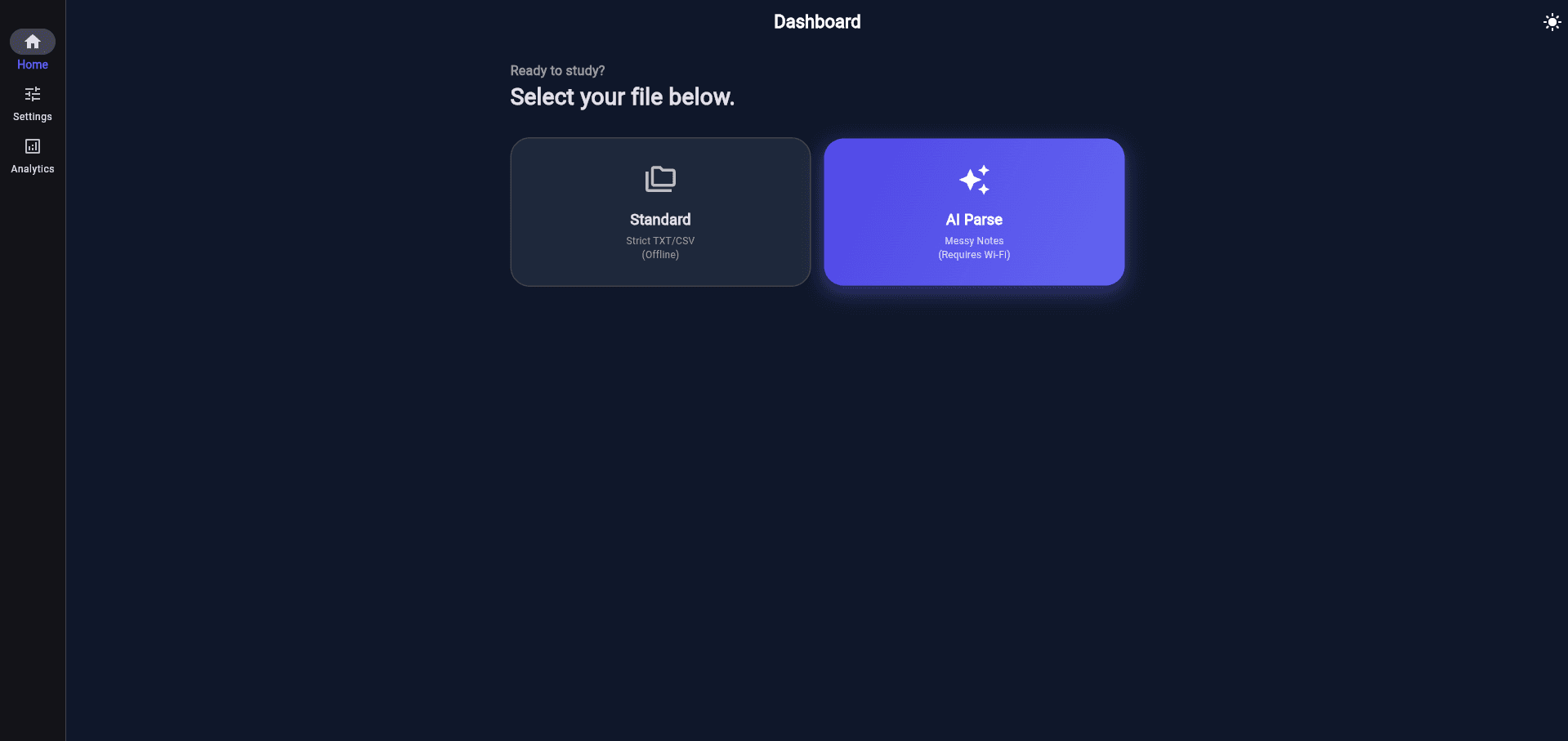
A comprehensive study management system built with Flutter and Firebase. It features AI-powered data parsing to transform unstructured notes into structured quizzes, an integrated AI tutor for explanations, advanced question slicing, and professional PDF exports.
The Problem
I’ve always struggled to find a tool that actually fit my study style for MCQ-based exams. I wanted something that didn't just passively store questions but actively helped me learn—highlighting my 'weak' areas, explaining concepts in real-time, and syncing perfectly whether I was commuting on my phone or sitting at my desk. After coming up empty-handed while prepping for my own computer science finals, I decided that if the right tool didn't exist, I would just build it myself.
Approach
Built a unified cross-platform codebase in Flutter, deploying it natively to mobile devices while also compiling a fully responsive web application.
Integrated Firestore for real-time state synchronization, allowing users to start a session on their phone and instantly pick up where they left off on their laptop.
Implemented an AI parsing pipeline that ingests messy, unstructured text or PDFs and strictly formats the output into structured JSON that the app can instantly render as playable MCQs.
Designed a dynamic analytics engine that tracks user performance history and automatically routes incorrectly answered items into a dedicated 'Weak Questions' bank for targeted mastery.
Utilized background processing isolates in Dart to handle complex file parsing and heavy PDF generation tasks without blocking the main UI thread, ensuring smooth animations and responsiveness.
Key Features
- AI-powered parsing to automatically generate structured MCQs from messy, unstructured lecture notes.
- Built-in AI 'Explain' feature providing real-time concept breakdowns inside the quiz.
- Advanced question slicing by topic, difficulty, and performance history.
- Generates and exports beautifully formatted PDF study guides and mistake reports.
- Cross-platform syncing between mobile and web via Firestore.
Challenges
The transition from a mobile-first design to a seamless web experience introduced significant challenges around state synchronization, browser caching, and responsive routing. Furthermore, handling messy data through the AI parser required careful prompt engineering; the model frequently tried to return conversational text instead of the strict JSON format the app required to function. Finally, ensuring the UI remained perfectly smooth while parsing heavy documents or compiling professional PDF reports meant I had to restructure how the app managed its state, offloading that heavy computation to background isolates.
Outcome
A complete, intelligent study ecosystem that goes far beyond traditional flashcards. It actively identifies knowledge gaps, explains complex topics on the fly, and generates professional offline materials. Building it served as a deep dive into cross-platform state management, responsive UI design, and practical AI integration—and it ultimately became my primary study tool for finals.